My Review
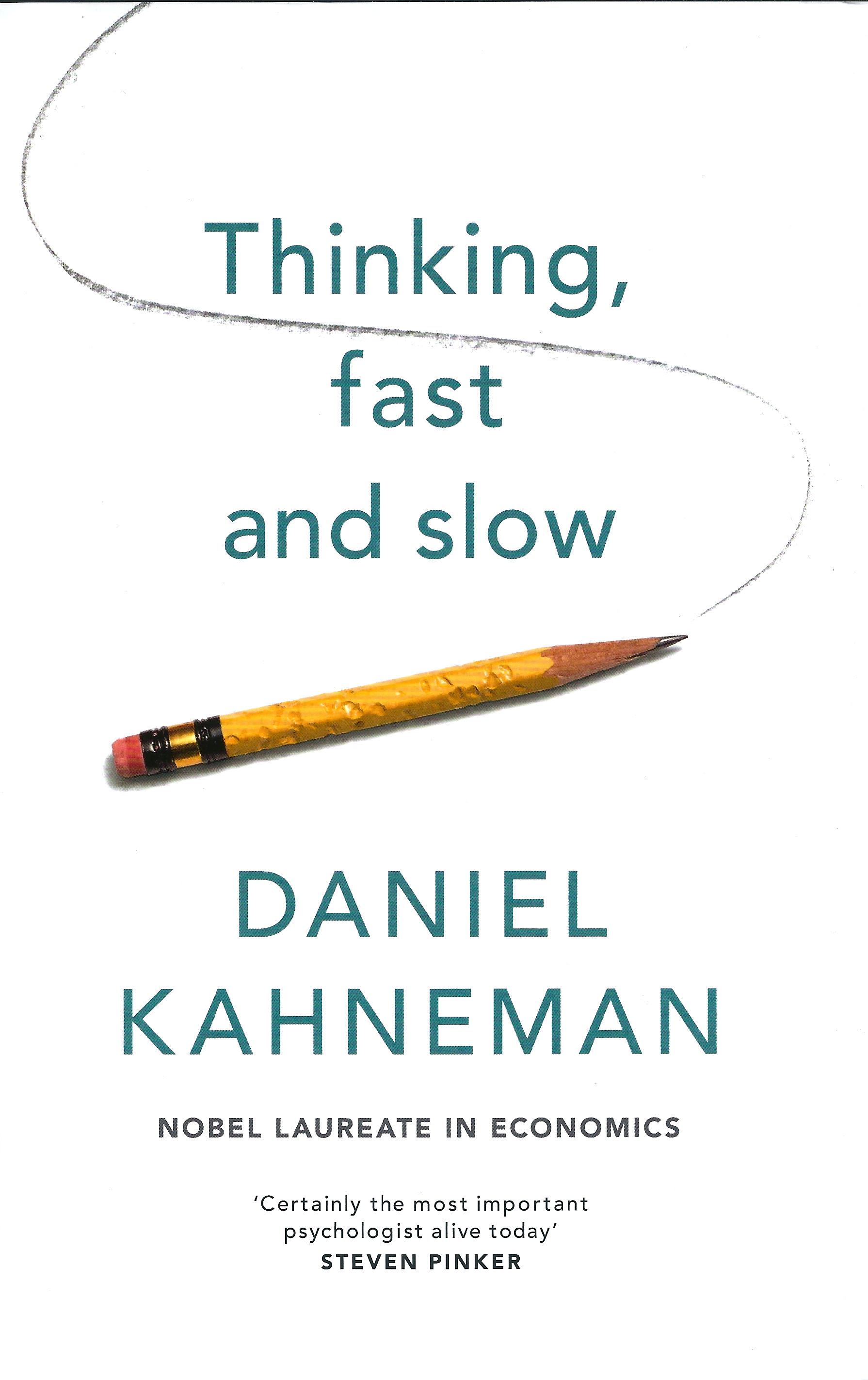
In the last few years two books took me FOREVER to get through. The first was Daniel Dennett's "Darwin's Dangerous Idea" and the second is Kahneman's "Thinking, Fast and Slow." What caused this? What do they have in common? Both books explain, in minute detail, simple concepts with immensely far-reaching implications, and both have been... after the slog... the most intellectually rewarding reading of my adult life.
Where to begin... I have a number of theories running around in my head, and occasionally I try to corral them on paper. I organize, sequence and interconnect them in a way that will prevent my reader from meaningfully widening their eyes, in an aside, while winding their finger around one ear... ("Cuckoo!") Good writing about complex topics is very, very difficult, and Kahneman has corraled 30+ years of science, his career and all he has learned into a perfectly arranged sequence that leads the reader into a wilderness... provisioning you in each chapter with the tools you'll need for the next part of the journey.
The second most striking effect on me is the number of times I said, "Yes... YES!!! this is what I've been saying!" In my case it has usually been some sort of "intuitive"(excuse me, Mr. Kahneman... I mean "System 1") recognition of a pattern in my observations about the way we think. In Kahneman's case those intuitions have been converted into theoretical propositions, each meticulously researched in well designed experiments. Clearly, this is at least one difference between me and a Nobel Prize winning researcher.
So why does this stuff matter? In the context of broader discussions of free will, intention, choice and control over the directions our lives take, this book can provide powerful insights that might currently be obscured by these "cognitive illusions" and the inherent limitations of "System 1/System 2" thinking.
Perhaps we're not as "free" in our decisions as we might like to think, if "priming" has such a stunningly reproducible effect. Perhaps we're not so determined, if activities that initially require "System 2" attention, can be turned into second-nature, "technical-expertise intuitions." I.e. learning and training MATTERS in our ability to detect and respond to events that... if untrained... might take advantage of our brain's inherent "blind spots" or weaknesses.
Perhaps childhood religious indoctrination is a very adept recognition of these mental tendencies/flaws, so profoundly (if intuitively/naively) expressed by Ignatius Loyola, founder of the Jesuit order, "Give me the boy until 7, I will give you the man." (paraphrased; forgive me)
Kahneman's discoveries and documentation of mental capacity and biases could form the basis of a "Mental Martial Arts" program: an alternative form of indoctrination, in which students are trained to understand their brains' weaknesses, and learn to take stances or engage in practices that eliminate or reduce the errors to which these weaknesses can lead.
This book will rearrange the way you think... about how you think.